Why Is My Heater Blowing Cold Air? 7 Possible Causes
A heater blowing cold air can result from an incorrect thermostat setting, dirty air filter, airflow problem, equipment startup cycle, ignition or heating-component issue, duct problem, or system malfunction. Some causes are simple to check, while others require professional HVAC diagnosis.
For homeowners in Columbia, SC, the first cool days of the season are often when heating problems become noticeable. Your system may have been sitting unused for months before suddenly being expected to maintain a comfortable indoor temperature.
Before assuming the entire heating system has failed, check a few basics and pay attention to how the equipment behaves. Knowing whether the air is briefly cool, constantly cold, or only affecting certain rooms can provide useful clues.
Here are seven possible reasons your heater is blowing cold air and what to do next.
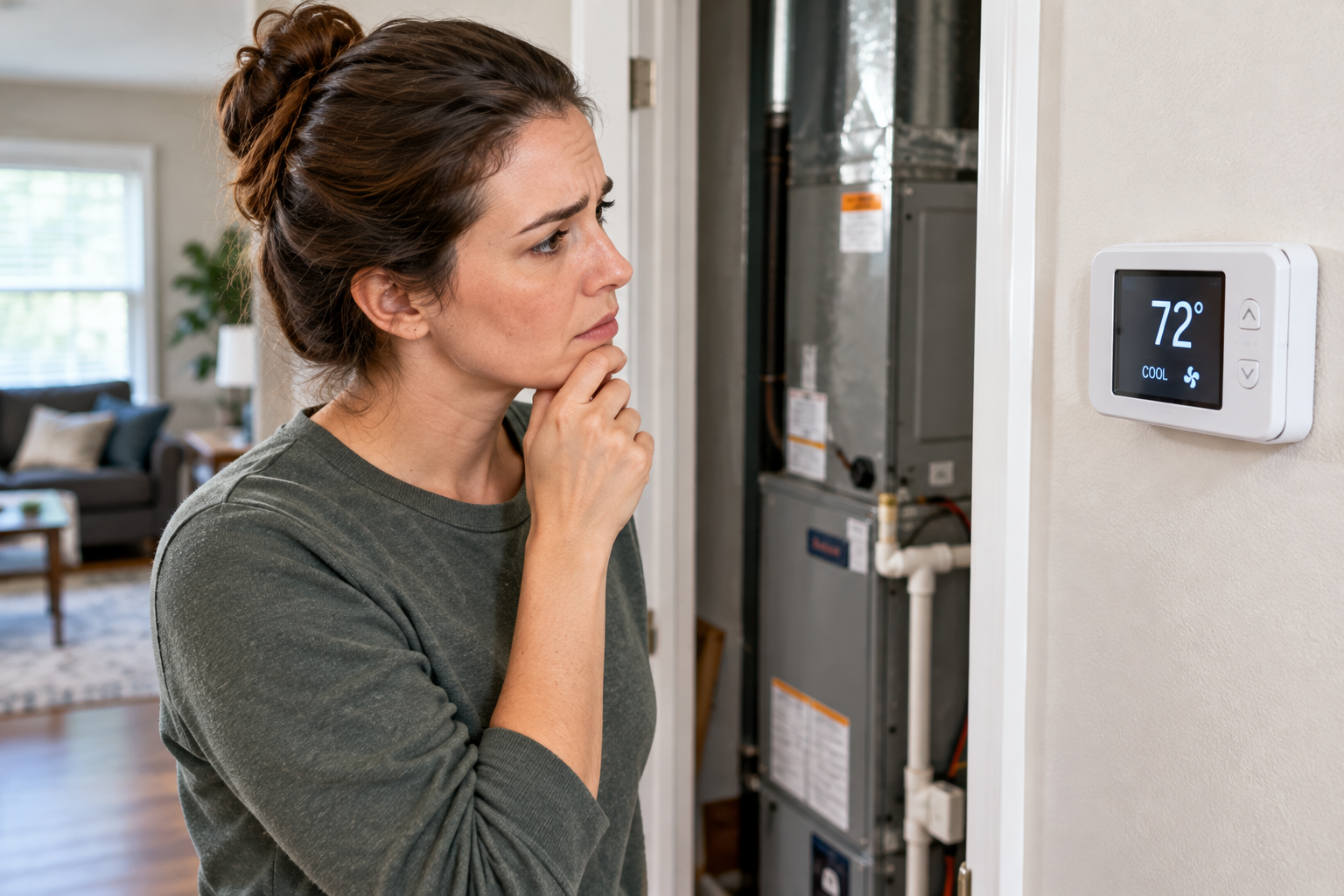
1. Your Thermostat May Be Set Incorrectly
Start with the thermostat because the problem may be easier to resolve than expected.
Confirm that the thermostat is set to Heat and the selected temperature is above the current indoor temperature.
Then check the fan setting.
If the fan is set to On, the blower may continue circulating air even when the heating equipment is not actively producing heat. During those periods, air from the vents can feel cool.
For normal automatic operation, try setting the fan to Auto unless your HVAC professional or system manufacturer recommends otherwise.
If the thermostat uses batteries, check them as well. A thermostat that is not controlling the equipment correctly can sometimes create symptoms that look like a heating-system failure.
2. The System May Need Time to Warm Up
Not every brief burst of cool air indicates a problem.
Depending on the type of heating system, there can be a short period between startup and the delivery of noticeably warm air through the vents.
Pay attention to duration.
If the air becomes warm after a short startup period and the home reaches the thermostat setting normally, the system may simply be going through its regular operating sequence.
However, if the vents continue producing cold air throughout the heating cycle or the house never reaches the selected temperature, further investigation is appropriate.
This distinction can prevent homeowners from mistaking normal startup behavior for a repair issue.
3. A Dirty Air Filter May Be Restricting Airflow
A dirty filter is one of the easiest HVAC issues for homeowners to check.
As dust and debris collect on the filter, airflow can become restricted. In certain heating systems, inadequate airflow can contribute to overheating and cause safety controls to interrupt normal heating operation.
Inspect the filter and replace or clean it according to the manufacturer's recommendations if it is dirty.
ENERGY STAR recommends checking HVAC filters regularly, especially during periods of heavy heating and cooling use.
4. Your Heating System May Have an Ignition or Heating-Component Problem
Gas furnaces and other heating systems depend on specific components to produce heat safely.
If the blower operates but the equipment is unable to generate heat correctly, room-temperature or cool air may continue moving through the ducts.
Possible causes vary by system type and can involve ignition, controls, safety components, electrical parts, or the heating equipment itself.
These are not appropriate DIY repairs.
Do not bypass safety switches, repeatedly reset malfunctioning equipment, or attempt to work on gas or electrical components without proper training.
If your furnace or heating system will not produce heat after basic thermostat and filter checks, professional diagnosis is the safer next step.
5. A Heat Pump Can Produce Air That Feels Different
Not every Columbia home uses a traditional furnace. If you have a heat pump, the air coming from your vents may not always feel as hot as air produced by some combustion-based heating systems.
A heat pump transfers heat rather than creating it in the same way a furnace does. Because of that, supply air may feel warm rather than extremely hot.
However, there is a difference between air that feels mildly warm and a system that is actually failing to heat the home.
Watch the indoor temperature.
If the heat pump runs but the house continues getting colder, or if the system operates abnormally, it may need professional attention.
This is especially important when outdoor temperatures change and the system must work harder to maintain indoor comfort.
6. Ductwork or Airflow Problems May Be Affecting Certain Rooms
Does the whole house feel cold, or only one or two rooms?
That detail matters.
If some rooms receive warm air while others receive weak or cool airflow, the issue may involve ductwork, blocked vents, airflow balance, or another distribution problem rather than the heating equipment alone.
Walk through your home and make sure supply and return vents are not blocked by:
- Furniture
- Rugs
- Curtains
- Storage boxes
- Other household items
Compare airflow from room to room.
If one area consistently feels different, tell your HVAC technician. Identifying where the problem occurs can help narrow the diagnostic process.
7. The System May Need Professional Diagnosis
If the thermostat is correctly configured, the filter is clean, vents are open, and the heater still blows cold air, the problem may be inside the equipment.
Professional diagnosis becomes particularly important when you notice additional symptoms such as:
- The heater repeatedly starts and stops.
- The home never reaches the thermostat setting.
- Unusual noises occur during operation.
- You smell persistent burning or electrical odors.
- The system shuts down unexpectedly.
- Heating performance suddenly declines.
- The equipment does not produce heat at all.
These symptoms can have multiple causes. Replacing parts based on guesswork may fail to correct the actual problem.
A trained technician can inspect the system and determine why heat is not being produced or distributed correctly.
Expert Insight: Describe Exactly When the Air Turns Cold
One of the most helpful things you can do before calling an HVAC technician is to observe the pattern.
Instead of simply reporting, “My heater blows cold air,” note when it happens.
For example:
- Is the air cool only when the system first starts?
- Does it stay cold for the entire cycle?
- Does it start warm and become cold later?
- Is the problem happening in every room?
- Does the system repeatedly turn on and off?
- Is the thermostat temperature continuing to fall?
These details help distinguish normal system behavior from a heating problem.
For homeowners in Columbia, Lexington, Irmo, West Columbia, Cayce, Blythewood, and nearby communities, testing the heater before colder weather settles in can also reveal problems before dependable heat becomes more urgent.
Frequently Asked Questions
Why is my heater blowing cold air when the heat is on?
Possible causes include an incorrect thermostat fan setting, dirty filter, airflow restriction, ignition or heating-component problem, or another system malfunction. Start with the thermostat and filter before requesting professional diagnosis.
Can a dirty filter cause a heater to blow cold air?
A severely dirty filter can restrict airflow and contribute to heating-system problems. Replace or clean a dirty filter according to the manufacturer's instructions, but seek professional service if the problem continues.
Is it normal for a heat pump to blow cooler air?
Heat-pump supply air can feel less hot than air from some furnaces. However, the system should still maintain the home's temperature. If indoor temperatures continue falling, professional diagnosis may be needed.
Should I turn my heater off if it is blowing cold air?
If the system produces burning or electrical odors, makes abnormal noises, repeatedly shuts down, or shows other signs of malfunction, turn it off and request professional assistance.
When should I call for heating repair?
Call when basic thermostat, filter, and vent checks do not restore normal heating or when the system cannot maintain temperature, repeatedly cycles, makes unusual noises, or stops producing heat.
Restore Reliable Heating in Your Columbia Home
A heater blowing cold air does not always mean the heating system has completely failed. Check the thermostat settings, inspect the air filter, make sure vents are unobstructed, and observe whether the problem affects the whole house or specific rooms.
If those steps do not restore normal heating, professional diagnostics can identify whether the problem involves airflow, controls, heating components, or another part of the system.
Solutions Heating & Air, LLC provides heating diagnostics and repair throughout Columbia, SC, and surrounding communities. The company also offers 24/7 availability when an HVAC problem becomes urgent.
If your heater is running but your Columbia home is not getting warm, call Solutions Heating & Air at (803) 269-5326.